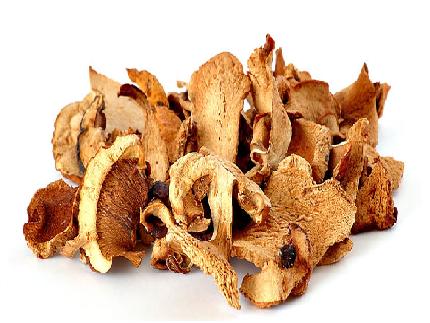
Mushroom structure
These emerging mushrooms are too immature to safely identify the species
the relative sizes of the cap and the pileus vary widely.
Identifying mushrooms requires a basic understanding of their macroscopic structure. A "typical" mushroom consists of a cap or pileus supported
on a stem or stipe. Both can have a variety of
shapes and be ornamented in various ways. The underside of the cap (in agarics) is fitted with gills or lamellae where the actual spores are produced. How the gills are attached is another important characteristic used in identification. In the boletes, the gills are replaced by small openings called pores. Bracket fungi essentially lack a stipe, and the cap is attached like a bracket to the substratum, usually a log or tree trunk. Some bracket fungi have gills, others have pores.
In general, identification to genus can be accomplished in the field using a local mushroom guide. Identification to species, however, requires more effort; one must remember that a mushroom develops from a young bud into a mature structure and only the latter can provide certain identification of the species. Examination of mature spores, or at least knowing their color, is often essential. To this end, a common method used to assist in identification is the spore print.
Apical germ pore
Apical Germ Pore is a term applied to mushroom spores which have a pore at one end. Some spores have a hole in the cell wall where the first strand of germinating mycelium emerges. If the cell wall is divided from one end to the other, this is called a germ slit. Commonly the germ pore is at one end of the mushroom spore and is called an apical pore.
Mushroom genera with apical germ pores include Agrocybe, Panaeolus, Psilocybe,
and Pholiota.
Mushroom
Labels: Mushroom structure
posted by Arip @ 12:25 AM
0 Comments